
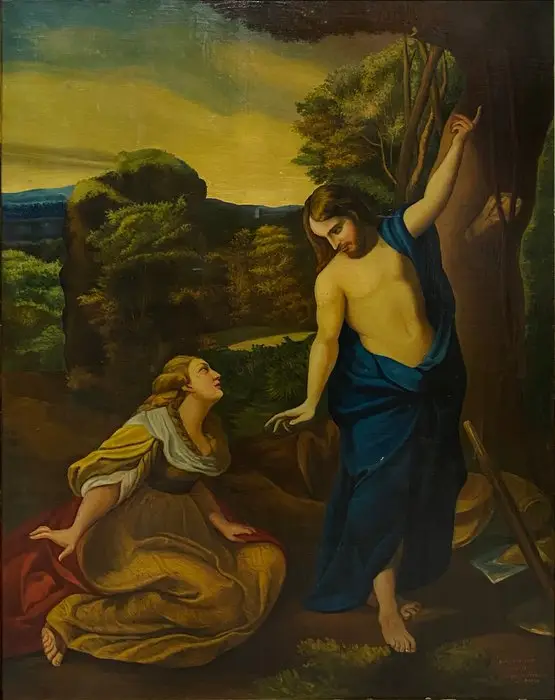
Antonio Allegri da Correggio was an Italian Renaissance master celebrated for his innovative use of light and movement. His technique, luminous sfumato, blended shadows into a warm radiance that gave figures a lifelike quality. This intimate style prioritized emotional expression and soft, fluid forms over rigid classical rules.
His revolutionary ceiling frescoes in Parma utilized daring perspective and foreshortening to create vast, illusionistic spaces. These works bridged the High Renaissance and Baroque periods, influencing painters like Caravaggio and Rembrandt. Correggio remains a pivotal figure for his ability to merge human sensuality with divine, atmospheric light.

Correggio remains one of the most enchanting painters of the Italian Renaissance — a master of shimmering light, sensual movement, and illusionistic space. Though he lived outside the major artistic centers of Florence and Rome, Correggio shaped the future of European painting with a style that felt almost supernatural in its softness and radiance.
A Quiet Genius from Parma
Correggio spent most of his life in and around Parma, far from the artistic rivalries of the larger cities. This distance gave him freedom. Instead of following strict classical rules, he developed a personal visual language built on:
- glowing, atmospheric light
- tender emotional expression
- fluid, graceful bodies
- daring perspective and foreshortening
His work feels intimate, dreamlike — almost whispered rather than declared.
Master of Light
Correggio’s signature is his luminous sfumato, a soft blending of tones that makes figures appear to breathe. Unlike Leonardo’s cool, smoky shadows, Correggio’s light is warm and glowing, like candlelight touching skin.
What is Luminous sfumato? It is Correggio’s signature way of blending light and shadow so softly that edges seem to melt into a warm glow. Instead of harsh outlines, forms dissolve into radiant, candlelit transitions that make figures look alive and illuminated from within. It’s sfumato, but infused with light rather than mist.
In works such as The Holy Night, the Christ child becomes the literal source of illumination, bathing the surrounding figures in a gentle radiance. This technique influenced later masters including:
- Caravaggio
- Rembrandt
- Velázquez
All of them borrowed Correggio’s idea that light could be emotional, not just technical.

Correggio: Nativity (known as The Holy Night)
Medium: Oil on canvas
Date: 1529–30
Illusionistic Ceilings: A Leap Toward the Baroque
Correggio’s frescoes in Parma Cathedral are among the most revolutionary works of the Renaissance. His Assumption of the Virgin explodes upward into a swirling vortex of angels, clouds, and divine light. The dome seems to open into the heavens.
This was a turning point in Western art.
Correggio’s daring use of perspective — figures tumbling, twisting, foreshortened — directly inspired the Baroque ceiling painters who came after him, especially:
- Giovanni Battista Tiepolo
- Pietro da Cortona
- Andrea Pozzo
Without Correggio, the Baroque might not have soared so high.
Correggio: Assumption of The Virgin
Medium: Fresco
Date: 1526–1530

Sensuality and Emotion
Correggio’s mythological paintings, including Jupiter and Io and Danaë, reveal another side of his genius: a sensual, atmospheric intimacy. His figures melt into soft light, their forms tender and human. These works were admired by later artists for their emotional depth and subtle eroticism.
Even in religious scenes, Correggio’s figures feel warm and alive — not idealized statues, but real people caught in moments of devotion, sorrow, or joy.

Carreggio: Jupiter and Io
Medium: Oil on canvas
Date: 1532–1533
Carreggio: Danaë
Medium: Oil on canvas
Date: 1489 – 1534

Legacy
Though he died young, Correggio’s influence rippled across Europe. His blend of softness, radiance, and illusionistic daring shaped the transition from the calm harmony of the High Renaissance to the dynamic drama of the Baroque.
Today, Correggio stands as one of the great poetic painters — a quiet innovator whose visions of heaven and humanity still glow with life.
Share your thoughts & leave and leave a comment!