
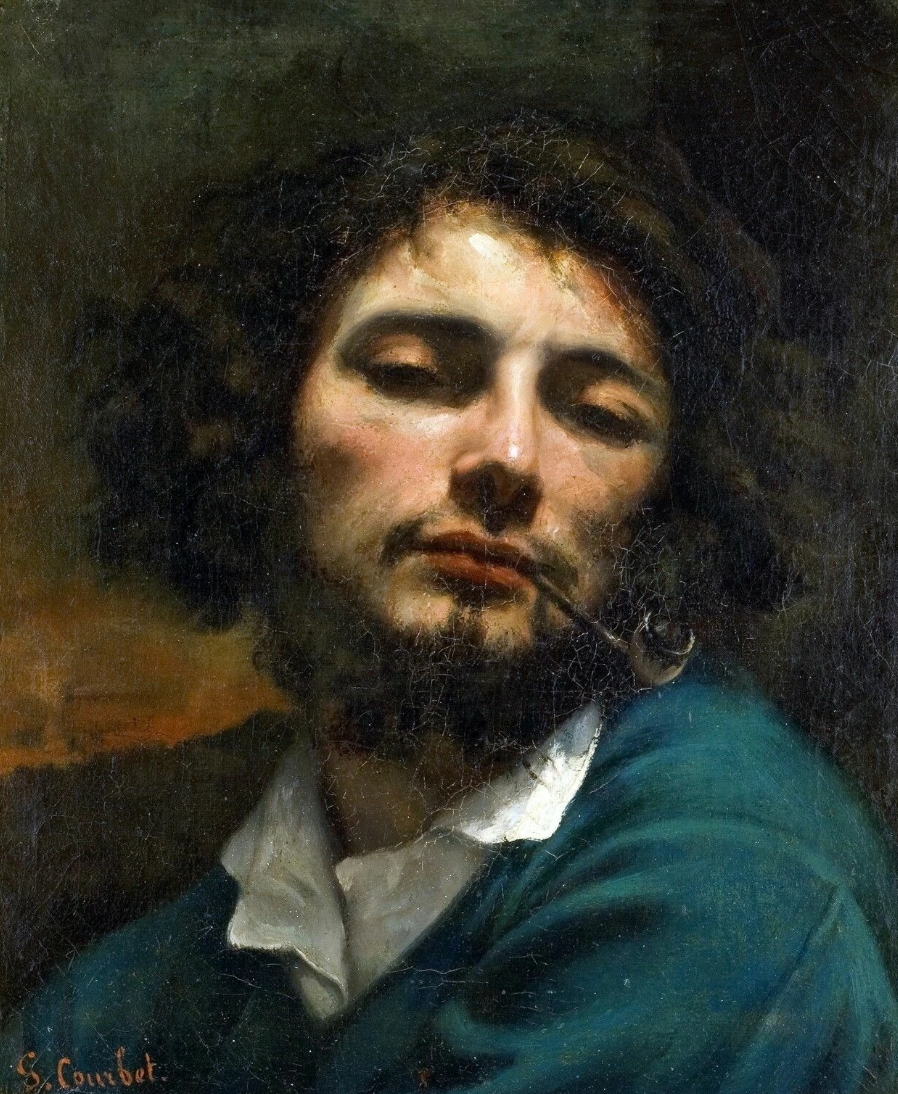
Gustave Courbet was a pioneering French painter who established the Realist movement by depicting everyday life and common laborers without idealization. By rejecting traditional mythological and aristocratic subjects, he challenged the nineteenth-century art establishment and introduced an authentic perspective that transformed the trajectory of modern art history.
Beyond his artistic contributions, Courbet was a politically active figure whose work often addressed social issues like poverty. His defiant approach and involvement in the Paris Commune led to controversy and eventual exile. His legacy remains significant for influencing future avant-garde movements through his commitment to artistic honesty.

Courbet wasn’t just a painter; he was a force of nature. In an era dominated by romanticized visions and academic idealism, Courbet insisted on painting the world exactly as he saw it — raw, unfiltered, and unapologetically real. His defiant approach didn’t just spark controversy; it transformed the trajectory of modern art.
A Vision Rooted in Reality
Courbet grew up in Ornans, a rural town in eastern France whose landscapes and people shaped his artistic identity. Unlike many artists of his time who gravitated toward mythological subjects or aristocratic portraiture, Courbet found beauty in everyday life. Farmers, laborers, stone breakers, and village funerals became his muses.
His philosophy was simple but radical:
“I cannot paint an angel because I have never seen one.”
This commitment to truth became the foundation of the Realist movement, a seismic shift that challenged the art establishment and paved the way for future avant‑garde movements.
What is the avant‑garde movement? It refers to artists and movements that push boundaries, challenge tradition, and introduce radically new ideas into the art world. The term comes from the French military phrase meaning “advance guard” — the soldiers who move ahead of the main force. In art, avant‑garde creators do the same: they move ahead of their time, often shocking audiences and reshaping cultural norms.
Breaking the Rules: Courbet’s Most Influential Works

The Stone Breakers (1849)
A monumental depiction of two laborers performing backbreaking work, this painting confronted viewers with the harsh realities of poverty. Courbet’s refusal to idealize his subjects was seen as both shocking and politically charged.

A Burial at Ornans (1849–1850)
At over 10 feet wide, this painting elevated a simple provincial funeral to the scale of history painting — a genre traditionally reserved for kings, saints, and heroic battles. Critics were outraged. Courbet was thrilled.

The Artist’s Studio (1855)
Subtitled “A Real Allegory Summing Up Seven Years of My Artistic Life,” this sprawling work places Courbet at the center of his own world, surrounded by friends, supporters, and everyday people. It’s part manifesto, part autobiography, and entirely Courbet.

The Desperate Man (1843–1845)
Courbet’s art wasn’t the only thing that stirred controversy. He was politically active, outspoken, and often at odds with authority. During the Paris Commune of 1871, he was implicated in the dismantling of the Vendôme Column — a symbol of imperial power. Though he denied ordering its destruction, he was fined heavily and eventually exiled to Switzerland.
Even in exile, Courbet continued painting, producing luminous landscapes and serene scenes that contrast sharply with his earlier confrontational works. Yet his rebellious spirit never dimmed.
Legacy: The Father of Modern Artistic Freedom
Courbet’s insistence on authenticity opened the door for Impressionists, Post‑Impressionists, and countless modern artists who rejected academic constraints. His influence can be felt in everything from documentary photography to contemporary social‑justice art.
Today, Courbet is celebrated not only for his technical mastery but for his courage. He painted truth at a time when truth was unwelcome — and in doing so, he changed art forever.
Why Courbet Still Matters
For artists, creators, and viewers today, Courbet’s message resonates: Art doesn’t need permission. It needs honesty.
His work reminds us that the everyday is worthy of attention, that beauty exists outside idealization, and that challenging the status quo can spark revolutions.
Learn more about this artist:
Share your thoughts & leave and leave a comment!