
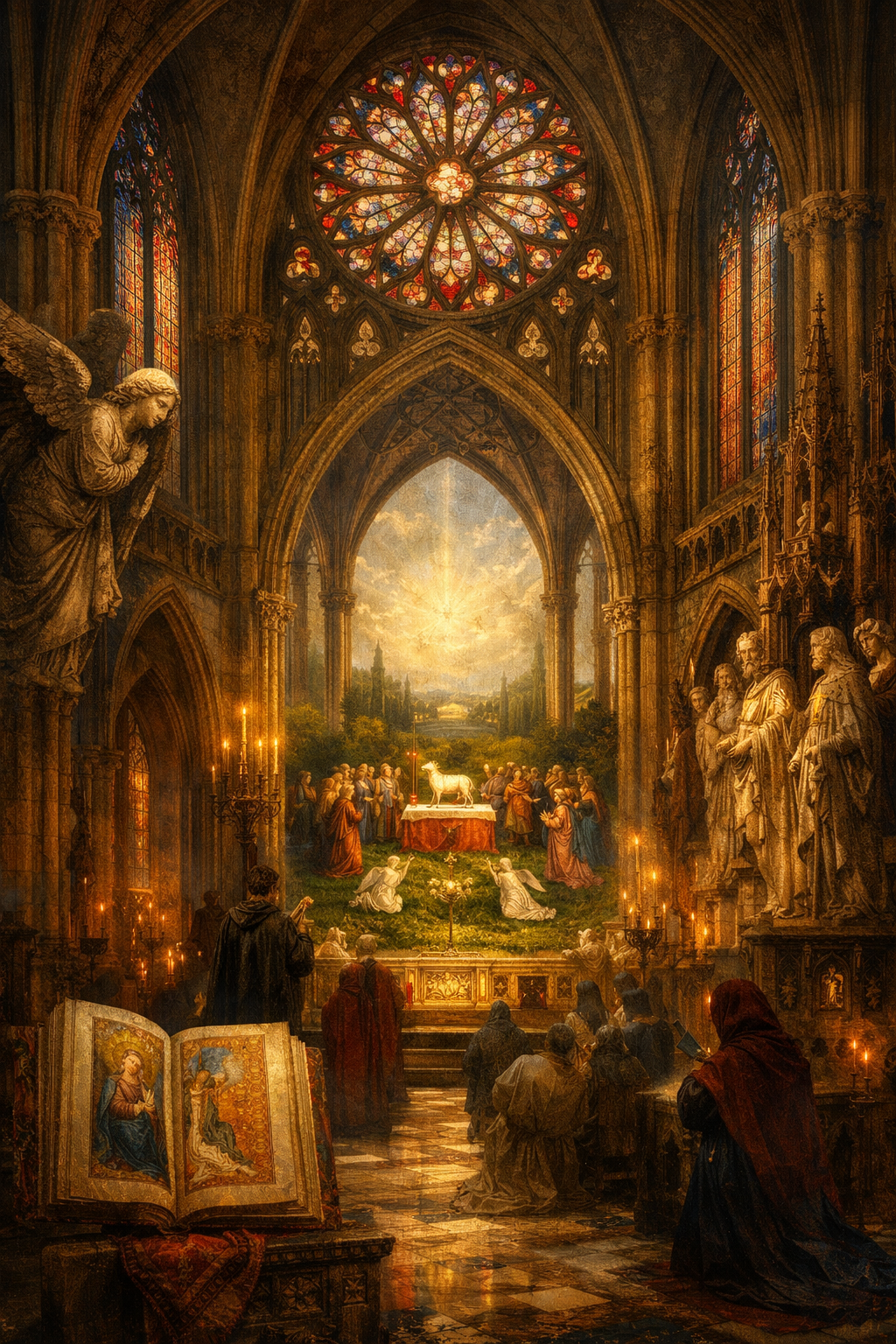
Jan and Hubert van Eyck were influential 15th-century Flemish painters credited with pioneering oil painting techniques and atmospheric perspective. Serving under patrons like Duke Philip the Good, they moved European art from Gothic traditions toward naturalism. Their collaborative masterpieces, such as the Ghent Altarpiece, redefined depth and emotional realism.
The brothers’ focus on light and symbolic storytelling transformed how viewers perceived space and spiritual subjects. By blending medieval spiritualism with technical precision, the van Eycks established a foundation for the Northern Renaissance. Their legacy remains central to understanding the evolution of Western art history and technical mastery.

Jan was born around 1390-1441 and is considered the actual “inventor” of oil painting. He worked in Holland as a court painter and townsman, and was highly esteemed by Duke Philip the Good of Burgundy.
Who was Duke Philip the Good?
Philip became Duke after his father’s assassination. He was responsible for the capture of Joan of Arc and, in 1430, formed a knightly group around the ideals of chivalry and the arts called The Order of the Golden Fleece, modeled on The Round Table.
Since Philip was a patron of the visual arts, he commissioned many types of artists, including jewellery makers. One of these artists was Van Eyck, whom he commissioned in 1428 to paint a portrait of his future wife, Infanta Isabella, the daughter of King John I.

*Copy after van Eyck, Isabella of Portugal van Eyck. (Private collection, date disputed.)
Medium: woodcut print
Date: 1428-1429
*There are no surviving portraits of Isabella commissioned by Van Eyck.
The Crucifixion Panel
Since the Van Eyck brothers have extremely similar painting techniques and skills, it is difficult to tell which brother worked on which work, or even if they did it together. The Crucifixion panel was done in oil paint, like the majority of Van Eyck’s artwork. What makes this panel special is how the brothers perfected atmospheric perspective.
Jan van Eyck and/or Hubert. The Crucifixion (Left panel of a diptych).
Medium: Oil on panel
Date: around 1436–1438

What is atmospheric perspective? It is the illusion of distance between the viewer and objects in a painting by using color and values in a way that makes subjects and objects seem to recede into the background.
There are many panel works by the brothers, but when we consider them collectively and the time period, we conclude that the art is Gothic. The figures depicted as Adam and Eve are a great example of Gothic art. In the video below, you will see the Adam and Eve panel, which is part of The Ghent Altarpiece.
What is Gothic Art?
Gothic art is a medieval European art movement that began in 12th‑century France and flourished for over three centuries. Known for its towering architecture, pointed arches, flying buttresses, and radiant stained‑glass windows, Gothic art transformed churches into light‑filled spiritual spaces. Its sculpture and painting shifted toward naturalism and emotional expression, depicting biblical stories with greater humanity and detail. From monumental cathedrals to illuminated manuscripts, Gothic art remains one of history’s most influential styles, celebrated for its dramatic beauty, symbolism, and cultural impact.
Hubert van Eyck

Hubert van Eyck (c. 1370–1426) was a pioneering Flemish painter whose work helped shape the early Northern Renaissance. Although his younger brother Jan van Eyck is more widely known, Hubert is often credited as the foundational force behind the naturalistic, detail‑rich style that transformed European painting in the 15th century.
Hubert’s life remains largely undocumented, but historical records and inscriptions suggest he was regarded as a master artist during his lifetime. His most significant association is with the Ghent Altarpiece, one of the most important artworks in Western history. A famous inscription on the frame states that Hubert began the altarpiece and Jan completed it, indicating Hubert’s crucial role in its conception and early execution.
Key Contributions
- Early innovator of oil painting techniques: Hubert is believed to have experimented with advanced oil‑based mediums that allowed for vivid color, fine detail, and luminous realism — techniques that Jan later perfected.
- Architect of the Ghent Altarpiece’s design: Art historians credit Hubert with the initial layout and theological structure of the polyptych, which blends complex symbolism, naturalistic landscapes, and monumental figures.
- Bridge between medieval and Renaissance art: His work marks a transition from Gothic stylization to the lifelike precision that defines Flemish realism.
Legacy
Even though few works can be definitively attributed to Hubert, his influence is woven into the foundations of Northern Renaissance art. The Ghent Altarpiece stands as a testament to his vision — a masterpiece that introduced unprecedented realism, emotional depth, and technical innovation. Today, Hubert van Eyck is celebrated as a mysterious yet essential figure whose contributions helped ignite a new era in European painting.
Jan and/or Hubert van Eyck’s Artwork
Paintings by Jan and/or Hubert van Eyck:
Top Left: Arnolfini Portrait, Medium: oil on oak panel by Jan van Eyck, 1434
Top Middle: The Annunciation, Medium: oil on canvas transferred from panel by Jan van Eyck, c. 1434/36
Top right: The Marriage of Giovanni Arnolfini and Giovanna Cenami by Jan van Eyck, 1434
Bottom Left: The Adoration of the Mystic Lamb, bottom central panel of the Ghent Altarpiece (open view) by Jan and Hubert van Eyck, 1432
Bottom Middle: Cain killing Abel, detail from the Ghent Altarpiece by Jan van Eyck, 1432
Final Thoughts
Gothic art’s devotion to light, symbolism, and spiritual storytelling laid the groundwork for the artistic breakthroughs that followed, and few artists embody that evolution more powerfully than Hubert and Jan van Eyck. Their innovations in oil painting, naturalistic detail, and atmospheric perspective pushed European art beyond medieval conventions and into a new era of realism. Together, these developments show how artists of the late Middle Ages weren’t just decorating sacred spaces — they were redefining how viewers perceived depth, emotion, and the world itself. The legacy of Gothic architecture’s soaring verticals, the Van Eycks’ luminous surfaces, and the emerging science of perspective continues to shape how we understand beauty, space, and artistic vision today.
Share your thoughts & leave and leave a comment!