
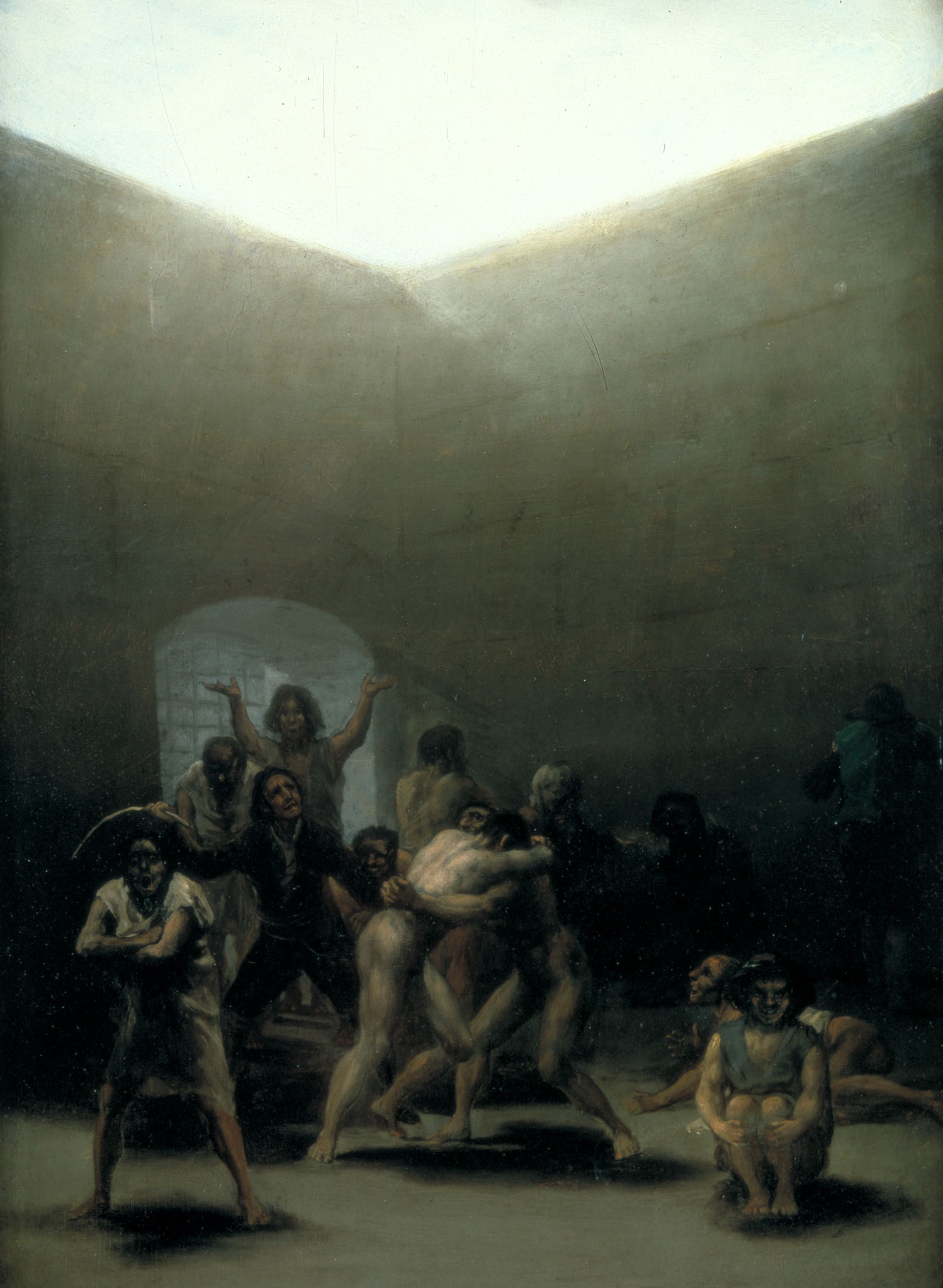

Francisco José de Goya y Lucientes (1746–1828) stands as one of the most influential artists in Western art history, often described as the last Old Master and the first modern painter. His career spanned a period of immense political upheaval in Spain, and his art reflects everything from the elegance of court life to the horrors of war and the depths of human psychology.
Early Life & Rise to Court Painter
Goya was born in Fuendetodos, Aragón, and trained under José Luzán in Zaragoza before moving to Madrid to study with the court painter Francisco Bayeu, whose sister he later married. His early career flourished through commissions for tapestry cartoons—over 60 designs depicting everyday Spanish life, created for the Royal Tapestry Factory between 1775 and 1792. These works show his mastery of Rococo charm and lively observation.
By 1786, he became a court painter to King Charles III, and in 1799 he rose to Primer Pintor de Cámara, the highest artistic rank in the Spanish court.


A Turning Point: Illness & Inner Darkness
In 1793, Goya suffered a mysterious illness that left him permanently deaf. This event dramatically shifted his artistic voice. His imagination turned toward the macabre, the irrational, and the nightmarish, themes that emerged in his etching series Los Caprichos (1799), which satirized Spanish society, superstition, and corruption.


Witness to War
During the Peninsular War (1808–1814), Goya remained in Madrid and witnessed the brutality of Napoleon’s invasion. In response, he created the powerful print series The Disasters of War, a raw, unfiltered depiction of violence, famine, and human suffering. He later painted The Second of May 1808 and The Third of May 1808, iconic images of resistance and execution that cemented his legacy as a political and emotional truth-teller.


The Black Paintings
In his final years, Goya retreated into isolation. Inside his home, the “Quinta del Sordo,” he painted the haunting Black Paintings directly onto the walls. Works like Saturn Devouring His Son reveal a bleak, almost existential despair—an unflinching look at humanity’s darkest impulses. These paintings are considered early precursors to modern expressionism.

Legacy
Goya’s influence stretches across centuries. His fearless exploration of emotion, politics, and the subconscious inspired artists from Manet to Picasso and shaped the evolution of modern art. His work bridges the elegance of the past with the psychological depth of the future, making him a cornerstone of both Romanticism and modernism.
Share your thoughts & leave and leave a comment!